Fragrance Notes Explained: Top, Heart and Base Without the Jargon
10 augustus 2026
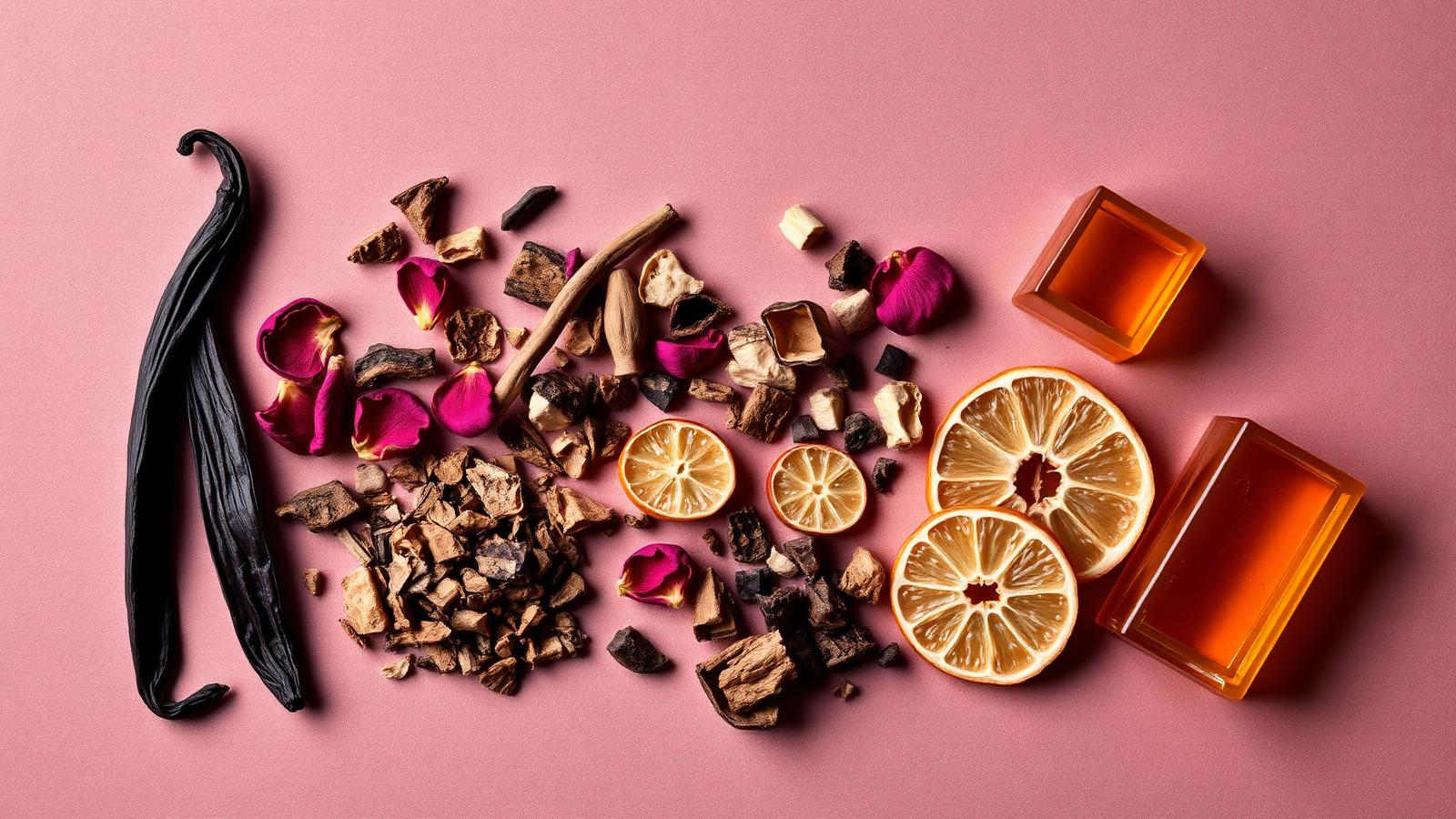
Top, heart and base notes are just a timeline. Learn how a fragrance unfolds hour by hour, and how to use notes to find scents you'll actually wear.
Perfume descriptions read like poetry and explain almost nothing. Top notes, heart notes, base notes — the words appear on every product page, and almost nobody says what they mean. So here it is in plain English: notes are a timeline, not a list of ingredients.
The three layers are three time windows
Top notes are the first five to fifteen minutes. They are the lightest, fastest-evaporating materials — citrus, aromatic herbs, fresh spices, aldehydes. This is what you smell on the paper strip in a shop, and it is the least useful part of the fragrance for deciding whether to buy it.
Heart notes arrive after fifteen minutes and hold for two to four hours. Florals, softer spices, green and fruity materials. This is the actual character of the fragrance — the part other people notice across a table.
Base notes take over after three or four hours and can last well past twelve. Woods, resins, musks, vanilla, oud, amber, leather. Base notes are what your jumper still smells of the next morning, and they do more than anything else to determine whether a scent feels expensive.
The practical consequence: never judge a fragrance in under an hour. It is the single most common and most expensive mistake in perfume buying, and it is exactly the problem decants solve.
The note families, briefly
- Citrus — bergamot, lemon, grapefruit, mandarin. Bright, fast, clean. Almost always a top note.
- Floral — rose, jasmine, tuberose, iris, orange blossom. The largest family and the most varied; jasmine can be soapy or animalic depending on what sits beside it.
- Fruity — peach, blackcurrant, apple, pear. Often what makes a modern fragrance read as sweet.
- Green and aromatic — vetiver, lavender, mint, fig leaf. Cool, sharp, outdoors.
- Spicy — pink pepper, cardamom, cinnamon, saffron. Adds heat and lift.
- Woody — cedar, sandalwood, oud, patchouli. Structure and longevity.
- Amber and resinous — labdanum, benzoin, incense, tonka. Warmth and depth; what people mean by "cosy".
- Gourmand — vanilla, praline, coffee, caramel. Edible, comforting, divisive.
- Musk and skin — white musk, ambroxan, ambrette. The "clean laundry" and "smells like you, better" effect.
Use notes to shop, not just to read
Once you know that you love saffron and dislike tuberose, you stop shopping by brand and start shopping by material. That is what the Perfumeza Notes Library is for: every note has its own page, and each page lists the decants in our catalogue that feature it. Follow oud from one house to another and you will learn more about your own taste in a fortnight than in a year of browsing.
A useful exercise: pick three fragrances you already love, list their base notes, and look for the overlap. There is almost always a shared material — usually a woody, musky or amber one — hiding underneath very different top notes. That material is your signature, and it will lead you to scents you would never have picked from the bottle.
Then test properly
Choose two or three decants that share your note, wear each for a full day, and write down what happens at hour one and hour six. Skin chemistry is real: the same vanilla can read as bakery on one person and as suede on another. Nothing on a website can tell you which one you are.
Start with the Notes Library, then take the Fragrance Finder if you want the shortlist built for you.